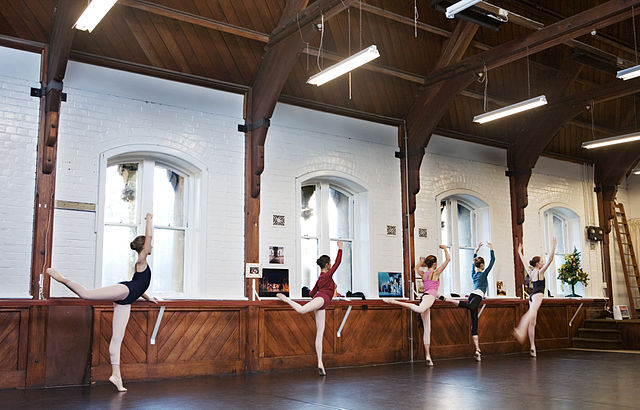
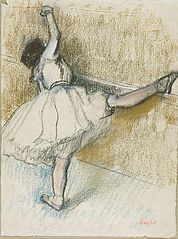
Despite the fact that stretching out dancers’ muscles is vital, there are many points to heed as you work towards a more supple, flexible body. In order to stretch safely and successfully, the body and muscles must be sufficiently warm: don’t hold static stretches (those held for longer than 30 seconds) before warming up. The stretches do increase flexibility but only once the body is warm. Stretching cold muscles achieves nothing and often leads to overstretching ligaments and tendons, increasing instability and resulting in pain. It also decreases the muscle’s ability to contract, resulting in less power and available strength once you start dancing.
The key to stretching effectively is to be incredibly warm, by first activating the muscles and getting blood flowing through the body before working toward greater flexibility and a more balanced body. Unfortunately, in a constant pursuit of greater flexibility, dancers have a tendency to favour extreme, and sometimes dangerous stretches, instead of following a gradual approach, creating weaknesses in their bodies. The first step in switching over to a safe stretching regime that increases muscle flexibility without sacrificing the stability needed for balances and the power needed for jumps is losing bad habits.
Often dancers get caught up with stretching one area of the body that they forget about the other muscles: if you stretch your hamstrings make sure you equate this when stretching your quadriceps. This means that creating imbalances in the body is less likely to happen. An additional method of countering this is by using a foam roller. This can be used when dancers are feeling tight in order to free up the connective tissue muscles before stretching them, decreasing muscles tension and pain. Foam rolling can be done prior to activity, even on cold muscles, or post-activity to release inhibited muscles and allows more freedom in a muscle that was otherwise restricted.
Image courtesy of Wikimedia Commons.
 The Big Dance Pledge is back for 2014, a chance to learn, make and perform dance with the rest of the world as one. As a mark of the 5th anniversary of the Big Dance Pledge, this special 5th edition is created by Scottish Ballet with fun and celebration at its heart, as part of the Glasgow 2014 Cultural Programme of the Commonwealth Games. Lots of help is at hand; watch the ‘Pledge Family’ demonstrate, look through the Big Dance tutorial and inspiration films to begin planning your own Pledge!
 American Repertory Ballet will present its first ‘On Pointe Enrichment Series’ event on 7 February, specifically aimed at children from 2 years, and their families, entitled “Telling Stories Through Dance”. The American Repertory Ballet Trainees and members of American Repertory Ballet Workshop (ARBW), a performing group comprised of Princeton Ballet School’s advanced students, will perform Matthew Keefe’s Grumpy Bird and selected variations from Princeton Ballet School’s spring 2014 production of The Sleeping Beauty. All American Repertory Ballet’s On Pointe events are free and open to the public.
 Cirque du Soleil, the renowned theatrical company famous for its incredible show performances, has announced it has formed Cirque du Soleil Theatrical, a New York-based division that will focus on developing new shows for Broadway, the West End and touring.
 Andrew Lloyd Webber’s charitable foundation has announced six grants which will support apprenticeships within professional arts organisations. The grants total more than £150,000, meaning young people will be able to gain better access to the arts, and gain a better chance of success with funds behind them as part of organisations.
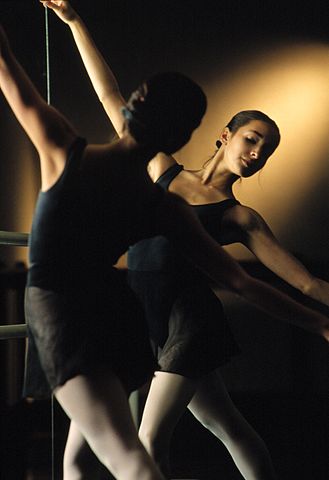 Dancer turned choreographer Carlos Acosta has warned that ballerinas are causing a crisis in the dance world because too few are making the leap to a career as top-level professional dancers. This sweeping statement seems rather unsupported, with Acosta claiming there are no female dancers of a sufficient stature for him to perform opposite, with girls becoming ‘non-existent’.
 Mary Helen Bowers is the ballerina behind
  The London Ballet Circle provides financial support to student dancers, raising funds by hosting events such as talks by dancers, choreographers and company directors where members can find out from artists about their life and work. The events of the LBC offer a range of prestigious industry artists as speakers at the events, and the LBC also arranges private visits to ballet schools so members can observe students in training, and their incredible discipline and dedication devoted to their art. All of the LBC events raise vital funds to assist the education of the next generation of talent.
 The New Year’s Honours List 2014, released on 30 December 2013, included nine honours for dance professionals, championing their work for the arts sector. Dance UK runs the dance sector’s Honours Advisory Committee which is a group of dance professionals who volunteer their time and expertise to ensure dance professionals are regularly nominated from across the rich and diverse world of dance. Teachers, dancers, managers and choreographers can all be nominated, recognised for their hard work in all dance forms.