
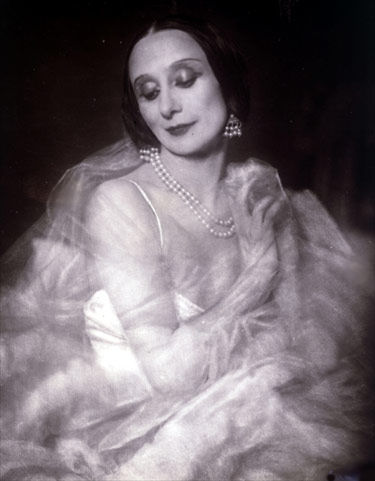
 For 2013, 12th February marked the 132nd birthday of celebrated ballerina Anna Pavlova, born 12 February 1881.
After attending the Imperial Ballet School, Pavlova made her company debut with the Imperial Russian Ballet in 1899 and soon became prima ballerina. She joined Diaghilev’s Ballet Russes in 1909 and formed her own company in 1911. However, Pavlova was a favourite of legendary choreographer Marius Petipa and was a hugely influential figure in dance and a key figure in the development of British ballet, even going on to inspire Frederick Ashton.
Pavlova’s Imperial Ballet-trained technique gave her a means to convey what mattered to her most: her expressiveness, rather than the steps. By the time most of the films of her dancing were made in the 1920s, she was relying on very simple choreography without fifth position, pirouettes, or arabesques, but runs on pointe, legs parallel, defining her legendary status beneath her Dying Swan tiara with strong, arched feet and beautiful arms and legs. The Dying Swan, the solo choreographed for her by Mikhail Fokine in 1907 was retained as her signature piece, with Pavlova dancing it 4,000 times.
In June 2012, the Pavlova Festival took place held at Ivy House in North London, Pavlova’s former home from 1912 until her death in 1931 after contracting double pneumonia. The festival included a number of special events, including a photographic exhibition and a film season at the British Film Institute, playing tribute to Pavlova’s beautiful art form, and an exquisite tutu and pointe shoes. It is over 100 years since Pavlova decided to leave Russia and make London her home, with Ivy House being the base from which she conducted her ballet school, training young girls who aspired to be part of her touring company.
Image courtesy of the Wikimedia Commons.
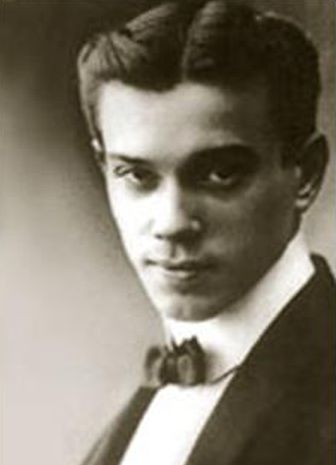 Sunday 10th March 2013 will see the London Coliseum host a tribute performance to Vaslav Nijinsky, one of the greatest male dancers of the early twentieth century. The performance will be made up of a Russian Ballet Icons Gala and Dinner, celebrating the life and work of a legend, with today’s ballet world owing much to this ballet dancer in particular.
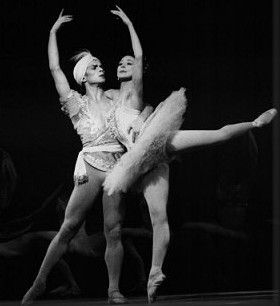 The partnership of Rudolf Nureyev and Margot Fonteyn is one which dance audiences and balletomanes alike still speculate about. However, it remains that their partnership is perhaps one of the most celebrated and talked about in the world.
 First Artist Jonathan Watkins is set to leave The Royal Ballet on 23 February to embark on a freelance career as a choreographer/director. Watkins joined the company in 2003, with his interest in choreography sparking as a student at The Royal Ballet School and continued in his transition to larger ballet shoes as part of the company. Watkins has, most recently, choreographed Diana and Actaeon as part of Titian: Metamorphosis 2012 with William Tuckett and Liam Scarlett. His many outside commissions to date include two short films for Channel 4 and serving as movement director for Alan Bennett’s latest play People at the National Theatre. Next for Watkins are numerous projects such as choreographing new works in Russia and America, and a collection of theatre and film projects.
 2012 saw the launch of the Dance Again Foundation, a charity which was created specifically to provide support and advice for professional dancers to help them return to the stage post-injury. Through its work, the Foundation aims to help each dancer manage each injury they have, and even prevent minor injuries develop into major ones through early intervention and enhanced rehabilitation. The injury does not have to have a dance-related cause: for many dancers who have experienced injury through accident, the Dance Again Foundation works to help dancers access the appropriate treatment and therapy to enable them to return to dance.
 With 2013 marking The Place’s 43rd anniversary, it was the opening of The Place theatre and the London Contemporary Dance School that saw a distinctly British school of modern dance. Although Robert Cohan may not have been the first person to teach or perform contemporary dance in the UK, he was the first to do it with a vision. As a dance partner of Martha Graham, one of the mothers of American modern dance, Cohan came to the UK from the US in 1967 and set in motion the careers of many of the UK’s most influential choreographers, from Richard Alston and Siobhan Davies to West End veteran Anthony Van Laast. Beginning humbly by teaching Graham technique to students, actors and artists who had little formal dance training, they were soon performing Cohan’s choreography as LCDT.