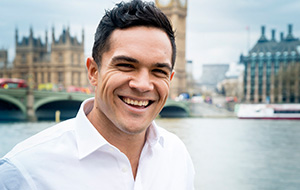
 New cast have joined the London production of Disney’s The Lion King this summer, including New Zealander Nicholas Afoa who has taken on the role of Simba at the Lyceum Theatre.
Afoa made his stage debut in the Australian production in 2013 and played Simba in the Sydney production of the musical between 2013 and 2016, performing more than 860 times. The opportunity to play the role in the West End brings Afoa to London for the first time, as he embarks on his second professional theatre engagement.
The Auckland-raised performer had a promising rugby career with the All Blacks until he was sidelined by injury. After recovering and dedicating himself to his theatre career, nearly a decade later the 30 year-old beat 400 other hopefuls to the role of Simba in the Australian production.
What caused your transition from rugby pitch to stage?
I suffered an ACL and miniscus tear in a rugby game when I was 23. My introduction to theatre wasn’t until years later as I spent a lot of time trying to rehab the knee and come back to rugby. I also spent time trying to start a band and focus on my solo music. I eventually accepted the fate that was the end of a rugby dream and focused on these artistic qualities; I feel so lucky to be where I am right now.
Did you undertake any formal training as a result?
My formal dance training really started once I had landed the role. Now being part of the show has become such a huge part of my life and I feel like I am training and improving my skills every day. It is great to be around so many talented performers and teachers in an environment where everyone is constantly learning.
Describe a day in your life.
I like to spend time with my wife, go to the gym, keep in touch with family back home and go to vocal classes or ballet classes to keep my body up to speed.
How important is your ranging and diverse world experience in your work today?
I wouldn’t be able to bring the same depth to the role if it wasn’t for my life experience over the last 10 years, the interactions I have had with people, the trials I have overcome and what I have learnt from overcoming them. I worked as a youth counsellor for four years, where I learnt so much about adolescent behaviour and the way young people (like Simba) view the world around them and perceive themselves – these are all things that helped me to bring Simba to life.
What’s the most rewarding thing about the performing arts?
The most rewarding thing is how, through your passion, you can also inspire and move others. That’s what drives me, especially if I’m feeling tired. The fact that somebody in that audience, young or old, is being positively affected by the show is the most rewarding thing.
Do you have any pre-show rituals?
I always say a little prayer moments before swinging on stage. Whenever I can I will watch young Simba and Mufasa in the first act. Their scene gives me an extra emotional boost that I carry through into the second act.
What is it like being part of The Lion King?
It’s very humbling. Every day I learn something new. I’m in an amazing show surrounded by talented, passionate people. I still consider myself very fortunate and never once take it for granted.
What were you most looking forward to about beginning your Lion King contract in London?
What I was looking forward to most was learning and experiencing new energies and actors, seeing how that would affect me as a performer and being able to see what contribution I could make. It was also a chance to experience life outside Australasia as I have never been this far away from home.
What is your advice to an aspiring dancer?
I see with the dancers I work with how dedicated every dancer is to maintaining their own standards. What dancers’ bodies go through is mind-blowing. It inspires me to keep bettering myself. My advice would be to keep working hard, but also give yourself time and space to heal when you need and to also take in some of the world around you. While it’s good to be driven we can get so set on our dreams that sometimes we lose touch with our surroundings. This is also where we learn the most about ourselves and in turn makes us better and rounded performers.
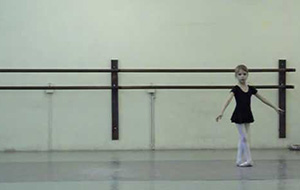 As children, parents and carers spend lots of time and money committing to dance lessons, even when they take joy from watching rather than doing. Taking children to dancing lessons requires energy and time, not to mention additional funds for competitions, costumes and extra performances. For a child, it is not until later that they see dance lessons in the same way, as an investment. Only then do they see that time, money and energy go to waste when they do not make the most of their dance lessons.
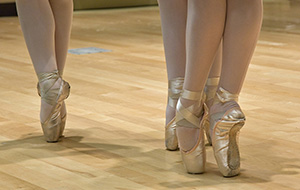 The aesthetics of ballet are continuing to evolve, however something which has remained a constant is the appearance of the foot when it is fully pointed. The ankle joint has limited movement outwards and inwards, however the adjustments of the foot’s position can make a big difference to how it looks to the audience.
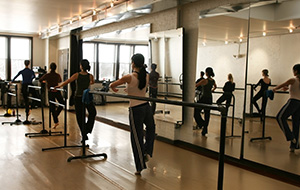 There are many dance-inspired fitness methods on the market today, from fitness trainers who used to be dancers to those who use dance as a means to remaining happy and healthy, whilst not having a dance background. Aerobics and Zumba classes still have their place, but these are now two of many different options for class participants. Workouts of these kind offer a combination of dance, fitness and wellbeing, and there is truly something to suit everyone, be it at sports centres or the local dance studio.
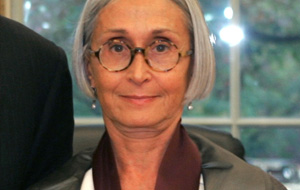 Twyla Tharp Dance recently took the premiere of its choreographer’s latest creation to Italy, performed at the end of June when the company visited Florence, Ravenna and Rome. This Italian tour saw the preview of a new work as well as two works performed from Tharp’s repertory. She has been creating dance for 50 years, and during that time she has choreographed over 160 works. These include 129 dances, 12 television specials, six Hollywood films, four full-length ballets, four Broadway shows and two figure skating routines.
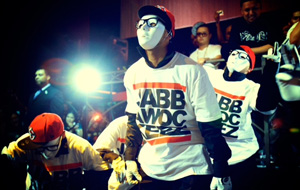 The 15th Annual World Hip Hop Championship is set to hit Las Vegas in August, where the world’s top hip hop and street dancers will be competing at the 2016 World Hip Hop DANCE Championship and World Battles. Otherwise referred to as “the Olympics of hip hop dance”, it will see a record number of 3,500 dancers representing 50 countries compete.
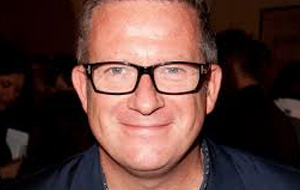 At the end of June, former ballerina Darcey Bussell CBE, in her capacity as President of the Royal Academy of Dance, escorted Sir Matthew Bourne to Buckingham Palace for a special occasion. In this exciting event as the Patron of the Royal Academy of Dance, Her Majesty The Queen presented the recently-knighted Sir Matthew Bourne with the Academy’s Queen Elizabeth II Coronation (QEII) Award, internationally renowned as one of the most coveted honours in dance. Bourne has contributed above and beyond to the dance industry, introducing new audiences and dancers to his world of performing.
 With the news of the UK’s exit from the European Union still reverberating, there has been lots to take in since the announcement of the referendum result on 24 June. Voting remain or leave have many different viewpoints attached, however in terms of the arts it is clear that the UK would have benefitted from remaining in the European Union.
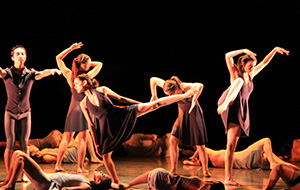 Whilst exercise is renowned for its stress-busting and happiness-inducing benefits, the same benefits of dance are sometimes overlooked. There are the obvious physical benefits of dance, in that it keeps the body fit and healthy, encouraging strong, lean muscle mass and a good range of flexibility, another valued strand of overall fitness. Often the mental benefits of dance – and exercise – are focused on less, however they have just as much value for the body, mind and wellbeing.