
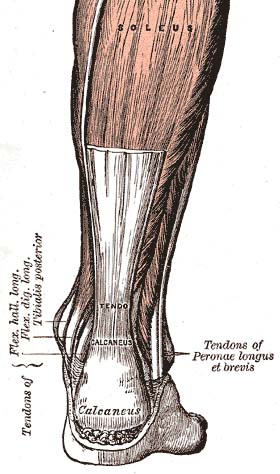
 Historically, the term ‘Achilles Heel’ referred to the greatest weakness of an individual: Achilles was a figure of Greek Mythology, a hero of the Trojan War killed by a small injury to his heel. Today, following this tale, the Achilles is the small tendon connecting the calf muscle to the heel bone. The tendon is still a weakness for many dancers, most notable recently was the snapping of the tendon of a Bolshoi dancer during a performance. This was a result of tendonosis, a chronic and more serious condition where bouts of tendonitis are not treated properly or the dancer does not take adequate time to rest.
The job of the elastic structures of tendons at the end of each muscle is to connect muscles to bones. However, dancing places stress on the Achilles tendon and Achilles tendonitis occurs when the tendon becomes inflamed due to overuse, excessive pronation, bowlegs, tight or short Achilles tendons, or abnormally shaped heel bones. Without correct technique, dancers increase their likelihood of developing Achilles tendonitis, making it imperative that dancers maintain their technique and do not develop bad habits. Forcing turnout, failing to press the heels into the ground in landing from jumps and failing to rise to a full three quarter pointe also puts dancers at further risk.
Achilles tendonitis can be prevented by ensuring you are not forcing the feet further outwards in turnout and landing properly from jumps. Make sure shoes and ribbons are not too tight across the tendon and try to avoid using hard, unsprung floors, raked stages, or dancing in cold temperatures. If Achilles tendonitis does occur, it can be resolved through proper treatment including rest, ice, strapping the tendon up and anti-inflammatory tablets, and taking additional steps to ensure it does not return. By making sure you are warmed up, tendons are less likely to become inflammed and injured under repeated stress.
 The Place is once again opening it’s annual Resolution! festival up to reviewers who wish to be partnered by a professional critic and pass judgment on some of the UK’s most promising new dance companies. The Place has engaged with audiences and participants, championed the best ideas, and created inspiring conditions for artists and enthusiasts to realise their potential for over forty years, including that of Resolution!. Combining London Contemporary Dance School, Richard Alston Dance Company and the Robin Howard Dance Theatre, together with pioneering learning, teaching, outreach, recreation and professional development projects The Place champions contemporary dance in particular, and all its strands.
 Autumn 2013 will see Sadler’s Wells continue its partnership with The Princes Foundation for Children and the Arts in the delivery of Dance Quest. Dance Quest is a project for the organisations in which 150 young people across the north of the capital will be introduced to live dance and performance. Students from five north London secondary schools will take part in workshops in the aim to make dance more prominent as an art form. This follows the introduction of the project last year, seeing great success.
 Swindon school pupils have learnt how to use dance to counter the threat of bullies, taking time out from lessons to learn about bullying through the medium of dance. Students at Holy Rood Junior School were given a talk by Pat O’Driscoll, who runs a local Matt Fiddes martial arts school, about bullying and how to counter it before his daughter Megan led a street dance session. Such a great initiative could be effective rolled out to other mainstream schools across the country.
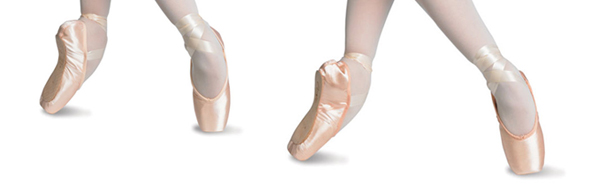 Beginning pointe work is not to be taken lightly or begun before your body is ready: going on pointe before this can cause foot deformities, for example, and other problems later in life. Factors such as age, parental expectations and the students’ desire to go on pointe are not substantial in determining if a student should starting training on pointe, with teachers needing to consider range of movement in the foot and ankle, technical ability and inherent bodily design overall.
 The 2013 Youth Dance Conference, named ‘Dance Insights – working together for the future of dance’, will take place on 20 November at CAST, Doncaster’s new performance venue in Yorkshire. The conference will cover teaching dance, health and wellbeing, and leadership in the context of working with young people on challenging economic times.
 Recent research commissioned by Ticketmaster has revealed that a higher proportion of people went to the theatre last year than attended a music concert or sporting event, with teenagers saying they are more likely to go than older people. Going against teenage stereotypes, the research also goes against theatrical stereotypes in which audiences are middle-class and middle-aged, with the most likely age group to say they will attend the theatre is 16 to 19 year olds, with 45 to 54 year olds least likely to attend.
 Former Royal Ballet dancer Xander Parish made his debut as principal in the Mariinsky Ballet’s production of Romeo and Juliet on 18 October in St Petersburg, having been scouted by Artistic Director Yuri Fateyev three years ago. As a British dancer, Parish trained at the Royal Ballet School and consequently joined the Royal Ballet. After five years, in 2010, Parish was invited to join the Mariinsky, with Fateyev sufficiently impressed by Parish’s artistic potential.
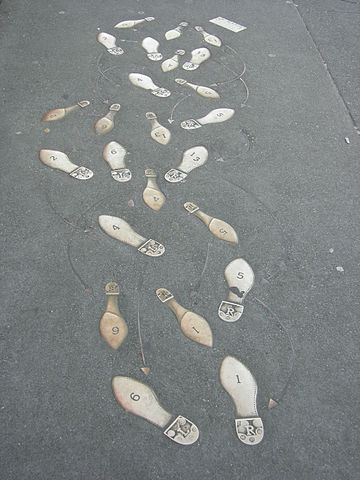 Picking up choreography in class or rehearsal can be an arduous task. If, as a dance student, it is something that you struggle with, it can be frustrating and inhibiting to observe peers grasping the movement while you are still worrying about the first eight counts. The movement can have the utmost simplicity, the counts can be clear and you can be familiar with the music, however putting the movements together and remembering them in that order can be a feat.
 For new starters of dance, or those who are contemplating it, a common question is a simple one: is it too late to dance?